By Rob Staton
I'll be updating my mock draft tomorrow, you can see a top-ten teaser on the right hand side bar. Below are a collection of links discussing ongoing events at the Senior Bowl in Mobile.
Bucky Brooks lists Oregon running back LaGarrette Blount amongst those who have boosted their stock this week: "Blount entered Senior Bowl week amid a host of character questions following his lengthy suspension following a postgame scuffle in the season opener against Boise State. While his character assessment remains a work in progress, Blount has impressed scouts with his solid play throughout the week. Blount has displayed a nice blend of speed and power as a runner, and his nifty footwork allows him to slither in and out of holes. Throw in the fact that he catches the ball as well as some receivers, Blount's value as an every-down back has started to rise in the minds of many scouts."
Matt McGuire isn't as positive about defensive backs Trevard Lindley (CB, Kentucky) and Taylor Mays (S, USC). On Mays' performance in Mobile: "Continues to bomb at the Senior Bowl."
McGuire goes into more detail on his criticism of Mays: "He's really struggling and showing all the weaknesses I thought he had. He's stiff, he doesn't play the ball, and his instincts aren't there. One time, Tebow threw a duck on a skinny post over the middle and Mays was clearly in position to make the pick, but he was too focused on making the big hit. He'll thrive at the Combine, but Michael Johnson did the same, and he went in Round 3. Mays won't go quite that low, but he isn't solidifying a first-round grade this week. I give him a ton of credit for coming out here to try and prove himself - we can't doubt his competitiveness and love of the game."
Albert R. Breer reports similar problems for another big name prospect - Tim Tebow. He quotes a NFC South scout's review of the Florida quarterback: "To me, he’s just not a very good quarterback prospect. Now, if you want to rework his mechanics, his release, try to improve his accuracy, then you see a guy with this big frame that can throw. He’s a big-time project, no doubt."
Rob Rang says West Virginia quarterback Jarrett Brown has been impressive: "For those that haven't yet seen him, Brown is far from another version of Wildcat-specialist Pat White. Brown has a quick release and a strong arm and was fearless Wednesday, attacking all levels of the field despite having already secured his status as one of the risers from this week's action. His strong performance and legitimate upside may have boosted his status into the late 2nd or early 3rd round."
Tony Pauline lists Jared Odrick (DT, Penn State) and Andre Roberts (WR, Citadel) amongst the most impressive performers this week, but isn't sure about Florida State cornerback Patrick Robinson: "The former Seminole star is athletically gifted and physically beats down opponents. But Robinson struggled against quick opponents he could not get his hands on and gave up receptions all week. He really never displayed the ability to make plays on the ball unless he was facing the action."
Mel Kiper discusses Tebow and the Senior Bowl:

Thursday, 28 January 2010


Wednesday, 27 January 2010
Understanding zone blocking and the future of the running game part 3: Zone scheme running backs
By Kip Earlywine
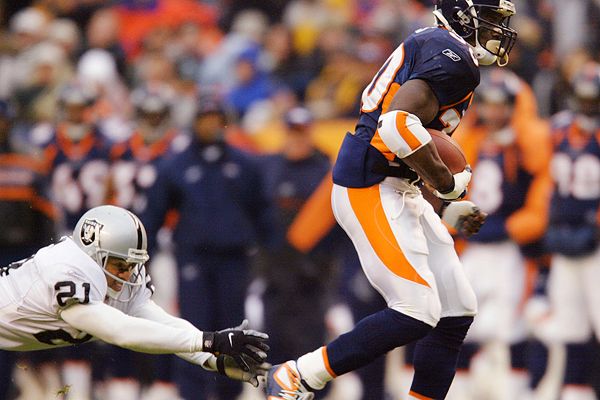
You may have heard that the zone blocking scheme can turn any running back into a star. That's a very common misconception that is based on the zone scheme's ability to turn late round running backs into 1000 yard rushers, as Denver did with Terrell Davis (6th rounder), Olandis Gary (4th round), and Mike Anderson (6th round). The truth is, it takes a very specific type of running back to get the most out of the system, and because the system emphasizes vision, decisiveness, burst and agility (cut making ability) instead of traditional attributes like speed, size, and power, it allows teams to produce great runners that would be overlooked by teams that run man scheme- teams that look for Adrian Peterson types.
Since overhauling the running game figures to be a big priority this offseason, I thought I'd take a look at the half-backs we currently have and see how well they fit the system:
Julius Jones: Jones was touted as being a zone scheme appropriate running back when he joined the Seahawks two years ago.
Positives:
-Very decisive
-Above average (but not elite) speed
-Has a nifty "hurricane" move that works well when trying to break tackles in the 2nd and 3rd level.
-Team player
-Great blocker
-Big play threat on screen passes
-Decently durable/plays hurt
-Rarely fumbles (0 fumbles in 2009)
Negatives:
-Is below average at penetrating the 1st level, which is a big deal in zone scheme.
-Vision, burst, and agility are all more or less just average.
-Decently expensive (roughly $4 million per season)
-Only a 3.7 YPC and only 44 combined DYAR in 220 total touches.
-Doesn't have a "nose" for the endzone, just 4 TDs in 335 carries in Seattle, which is in line with his career numbers.
Jones is a decent fit for the system but not ideal, and as a result, the overall package (including blocking) is a player that isn't killing us, but he's not helping much, either. According to Football outsiders, he's worth a mere .2 yards per attempt over a practice squad type player. Jones is still in his prime, and at 28 years of age (he was born 2 days after I was, how about that), he could easily continue his current level of performance for the remaining life of his contract (2 years). However, with a potential uncapped year coming, it might make sense for the Seahawks to release him and take his contract off the 2011 books, and just replace him with a rookie who costs about a fifth as much money.
Justin Forsett: Forsett was a 7th round pick who was released by the team in 2008 before we lucked out and he was reclaimed.
Positives:
-Great vision, terrific (Alexander level) running instincts
-Outstanding burst especially given his lack of speed.
-Decisive
-Defenders at the line can sometimes lose track of him due to his small size
-High effort, plays bigger than his size
-Makes good cuts
-Excels at breaching the 1st level
-Surprisingly dangerous outlet receiver
-Productive: 5.4 YPC and 155 DYAR in 155 total touches.
-Consistent
-Low cost
Negatives:
-Four fumbles in only 114 carries. Not completely horrible, but below average.
-Despite giving top effort, his size limits his pass blocking to below average and inconsistent.
-Fairly limited upside. Forsett isn't a workhorse type and probably can't play any better than he did in 2009 (which was obviously pretty good).
-Very low top speed, a "big play" for Forsett is 20-40 yards typically.
-Despite very good production, Forsett only managed 5 TDs in 155 total touches. That's not bad, but not good either.
-Very small size, which means he's probably a higher risk for injury
-If he does get injured, he has no speed to spare, so like how Hasselbeck's barely adequate arm became a huge liability when he lost arm strength, Forsett could become a liability if he has to play hurt (unlike a guy like Spiller, who can still dominate while hurt).
Overall, Forsett was a perfect fit for zone scheme, and in 2009 he showed us that his performance against Chicago in the '08 pre-season was not a fluke. It might be surprising that a small back with so little top speed could be so productive. The secret to his success is because (according to a study by footballoutsiders), zone scheme is better suited at producing medium sized rushes between 4 and 9 yards, and is also better for avoiding negative rushing plays. Forsett's ability to break through the first level and get a reliable amount of yards with such frequency is how he totaled such good numbers.
Louis Rankin: Rankin was released by the Oakland Raiders last September. The Seahawks added Rankin to their practice squad and promoted him to the active roster about a week before they released Edgerrin James.
Positives:
-Decent size (6'1", 205)
-Very good top speed, supposedly in the 4.4-4.5 range
-Low cost
-UW alum (or is that a bad thing?)
Negatives:
-Only 8 carries to evaluate him by, which included a fumble.
-Below average as a kick returner.
It would be impossible to sum up Rankin by what he's done so far as a Seahawk. Thankfully, I'm a diehard UW fan who hasn't missed a game in years. Rankin's college "skillset:" good moves, deceptive speed, above average size, all paint him as being best suited in a man system. Rankin does not have good vision, and in just the few reps I've seen him in zone scheme, he looks overly deliberate in choosing a hole and doesn't even seem to look for the cutback lane. I think Rankin has enough talent to be a good backup somewhere else in a man scheme where all he has to do is to run to an assigned spot every play and not worry as much about cut-backs. He's not a great fit for zone and his special teams abilities aren't helping, so I don't think the Seahawks should retain him.
The Verdict:
For the Seahawks to improve the running game, they need to add at least 1 RB in the draft this year, maybe 2. Thankfully, Alex Gibbs teams have averaged drafting (iirc) a whopping 1.3 RB's per draft. Seattle should target backs who are intelligent (can see where the holes are developing and make a quick and smart decision), agile, and have great acceleration to help power them through the first level.
One (potential) free agent possibility is Reggie Bush. Bush posted even better DYAR/carry than Forsett in 2009, and brings big play potential. Bush's status as a 3rd string back and his remaining $20+ million owed to him the next two years could make him a possible target for release in this unique financial offseason. Bush has great speed, good running instincts, good moves, good burst, unreal receiving skills for a RB, and has played (and excelled) in a zone system in both New Orleans and USC.
In the draft, I still have a lot of homework to do, but my early favorite is Joe McKnight. I'll give a McKnight a preview piece in about a week or so, but until then, here's something to look at (nsfw):
(full screen version here, if you prefer)
There are times, such as at 1:10 in that video, where McKnight's acceleration just explodes off the screen and I have to pick my jaw up off the floor. Dancing behind the line is the bane of a zone running back, but McKnight has kind of a nifty way of "cheating" by dancing in the backfield without losing speed. He'll turn towards a cutback lane for a split second, and then transition via a weaving motion towards the his initial option and turn on the burst. The flaw of highlight videos is we don't get to see when this tactic fails, but I have to say, it looks so devastating when it works that I can't imagine it backfires often. Another thing that is appealing to me is that McKnight's stock seems much lower than it should be, he's currently projected by Walter Football as a 2nd to 4th rounder. He also played for Carroll and Bates last year, in a zone scheme running game- which makes him easy to project and a "safe" pick. Even if drafted in the 2nd round, he'd be playing on a very affordable contract.
Anyway, there are certainly many RB options, Spiller in the 1st, to Best in the 2nd, to McKnight in the 3rd (hopefully 4th), and many great options beyond. And of course its those late round picks that could be potential home runs. Every offseason you can find great zone runners that are overlooked, just as Forsett was in 2008. If Gibbs and company can identify that late round difference maker, like perhaps McKnight's teammate Stefan Johnson, they could end up getting a 1st or 2nd round value out of a 6th or 7th round pick. And that's how team's "win" the draft.
Senior Bowl links - Mays struggling?
Bucky Brooks has been disappointed with USC's Taylor Mays at the Senior Bowl so far: "The most impressive physical specimen on the field has underwhelmed scouts with his play this week. Mays has struggled staying with receivers in drills, and his outstanding measurables haven’t translated into smooth or fluid movements in coverage. While he has shown up occasionally as a hitter against the run, Mays' inability to get around the ball consistently has drawn red flags from scouts expecting to see a "can’t miss" talent at the safety position."
Tony Pauline also lists Mays amongst his stock 'sliders': "Mays checked in at a chiseled 231 pounds, but may be a little too big for the safety position. He looked stiff and mechanical with his defensive back fundamentals and really showed limited skills in pass coverage drills. Teams may start projecting Mays to outside linebacker based on his inability to make plays in centerfield."
Rob Rang passes on a report from Chad Reuter at the Senior Bowl which was particularly critical of the SoCal prospect: "The South safeties didn't have much luck locking on receivers, especially in one-on-one drills. USC's Taylor Mays really struggled to plant and drive coming out of his backpedal, looking like Fred Flintstone churning his feet without any resulting forward movement."
Pat Kirwan was impressed with Idaho's Iupati and Michigan defensive end Brandon Graham: "Iupati has power and excellent balance. He rarely struggled with one-on-one blocks, quickly squaring up the defensive tackle and neutralizing his rush. He is quick to get out of his stance and into the run-blocking game. Iupati showed the ability to torque a defender and put him on the ground. I want to see more when he pulls, but this guy can play."
Matt McGuire says Tim Tebow was very inconsistent on day two: "At times he threw balls with nice touch, then he'd toss some serious ducks. He hesitated with decision-making, and toward the middle of practice in skeleton drills, he struggled to make quick decisions and opted to run. Today's practice was better than yesterday's and from what I heard, his accuracy today was significantly better, but we are talking about a huge stretch if Tebow was to get drafted in the first round. He's not winning over anyone in Mobile."
Tuesday, 26 January 2010
Why absentees are understandable
By Rob Staton
A lot of negativity has surrounded the decision by some prospects not to attend this week's Senior Bowl. Charles Brown (OT, USC), Trent Williams (OT, Oklahoma), Brandon LaFell (WR, LSU) and Jerry Hughes (DE, TCU) are amongst the no-shows. There are some more obvious absentees - but nobody really expected Ndamukong Suh (DT, Nebraska) to turn up.
Critics have labelled it a 'missed opportunity' that prospects like Brown, Williams et al haven't landed for work outs. Personally, I'm not surprised. They are the guys with the most to lose. It's a unique environment, around people you've never played with before. You're working out for new coaches with a lot of press and scouts watching on. The chances of you putting in a poor display are more likely than you perform lights out and boost your stock. Very few prospects come out of a senior bowl with that kind of bonus. I can think of two in recent years - Dominique Rodgers-Cromartie and B.J. Raji. Neither entered work outs with a big reputation or bigger expectations.
Of the seniors drafted in the top ten last year, only Raji attended the Senior Bowl. No Aaron Curry, no Eugene Monroe, no Jason Smith. Michael Oher did attend and he ended up tumbling down many teams draft boards after an inconsistent showing. In the strange environment, Oher didn't look comfortable. Teams who had seen a dominant, skillful blocker for Ole Miss began to find faults. Interviews went badly and by the time the combine rolled around - the Smith's, Monroe's etc had over-taken Oher as the top ranked linemen in the draft.
At the moment, Charles Brown has a late first/early second round grade. He weighed around 280-290lbs at USC, which isn't big enough for the NFL. If he turned up at 290lbs in Mobile and then didn't perform too well, it would linger in scouts minds. Brown now has a month to work out and get bigger before the combine, when running and benching are his only tasks - not blocking for many watching eyes during scrimmages. It's the same for Williams, LaFell and Hughes. They aren't likely to enhance their stock - they have more to lose than gain. Nobody's criticising the 'sure things' for not appearing - Suh, Okung etc. What's the difference? They're all protecting their stock with little to gain. It's just that some guys are realistic top ten picks and others are aware that they're stock might have peaked lower down the board.
It's admirable that Tim Tebow is there - good for him. That's the competitor that he is. However, all we're hearing for scouts, journalists and onlookers is how poorly he's performing taking snaps behind center. We're hearing about his inaccuracy throwing. We're hearing about his lack of footwork. Tebow carried a mystique, an interest, before arriving in Mobile. Sure - there are concerns, but maybe he'll just land in the NFL and it'll come together? It's very possible that mystery has been taken away in some scouts minds. Even Tebow's biggest admirers, thinking they take a gamble on Tebow in round one or even round two, might be having second thoughts.
Clearly, the Senior Bowl is a better event for those whose stock is in the 2nd-3rd range and lower. They have a chance to rise up with a good performance and maybe get into round one. The guys from smaller schools (Iupati anyone?) can show they deserve to be first round picks. The prospects who haven't been on the radar can enter scouts minds and force them to dig out the tape.
However, we know what Charles Brown can or can't do. We know what Trent Williams can or can't do. There's a years worth of tape from 2009 alone to reference and that's where you really find out about prospects - not in arranged work outs and a practise match on Saturday.
We want everyone to be at these events, but in some cases it makes no sense to risk your stock when there's millions of dollars on the line. It's a shame, but that's the harsh reality of a NFL draft the rewards rookies with veteran contracts. Rather than criticise Charles Brown and co, I'm more tempted to say they've absolutely made the right decision. See you at the combine.
Monday, 25 January 2010
Understanding zone blocking and the future of the running game part 2: Seattle's existing O-line personnel
By Kip Earlywine
Thanks everyone for leaving comments and suggestions in part 1. This explanation in particular was very informative.
I realize as I sit down to write this post that addressing every offensive lineman in depth and going over every possible offseason offensive line option is probably insane to attempt in one shot. So instead, I'll just very quickly give my 2 cents on each member of the existing line and whether or not I see them as long term options. Down the road, I'll make some posts about potential offseason options at offensive line.
Ok, but before I begin that, I wanted to link this entertaining zone blocking scheme explanation from NFL network. Yes, its Brian Billick, and yes, he illustrates his point using Madden. That combination could cause a cynic to injure himself from rolling his eyes too hard. But regardless, for how brief it was, I thought it was an entertaining and a surprisingly informative watch. Have a gander: Link.
At the 1:40 mark, check out the center (#69), how he gets all the way around to the outside shoulder of the DT, and when he knows he's about to lose his block, he dives for the legs. That sequence allowed the hole to be open fairly long, and it kept the DT (#67) who was assigned that running lane from ever really factoring on a nice 6-7 yard gain. Hustle and minimizing direct engagement (engaging defenders at angles) seems to be what makes this system work.
The more I learn about the system, the more I realize just how valuable the running back is to its success. If you field 5 competent zone scheme appropriate blockers, holes will open somewhere, and its up to the back to see them and make a decisive cut to the cutback lane as quickly as possible.
The problem for the Seahawks the last two years has been that, in all brutal honesty, they almost never fielded 5 competent zone appropriate linemen. And when they did, they didn't stay healthy. That has to change, even if it means bringing in low profile veterans who can stay healthy and won't kill us. Here is the list of the Seahawks existing offensive line, broken down by category.
Who? Guys that are on the edge of the roster:
Na'Shan Goddard- the Seahawks site lists him on the roster, but Wikipedia claims he's now a member of the Saints practice squad. Either way, he's already 26 and has never even made an active roster, so we probably don't have to worry about him either way.
Trevor Canfield- this, along with losing Derek Walker for no reason and signing punter Jon Ryan to a 6 year extension, is pretty much the full legacy of GM Ruston Webster. Webster signed Canfield on December 30th off the Cardinals practice squad. You can read more about Canfield here. Teams often try to stash decent zone scheme players on practice squads, since they can be found in such abundance late in the draft. Brandon Frye was acquired off the Texans practice squad, and played pretty well for us. From the link above, Canfield sounds like the type of guard I'd expect Gibbs to look for this offseason.
Mike Gibson- The Seahawks were quite the vultures in 2009, signing three different zone friendly offensive linemen from other team's practice squads. We know a little more about Gibson, who actually made the active roster and even played late in the season. My very preliminary impression of him was that he didn't stand out as being particularly good or bad. And for a practice squad player, that has to be considered a big success. Compare that against the miserable failures of Kyle Williams or Steve Vallos, especially in that first Arizona game. Anyway, Gibson is a former JuCo All-American, and 6th round pick.
Brandon Frye- Frye was once a starting left tackle for Virginia Tech, and a 5th round pick who was coached by Alex Gibbs during his days with the Texans. Frye was thrown into the fire when he had to face Dwight Freeney in only his 2nd start ever. That was an impossible situation and Frye didn't play well, but he did perform solidly against San Francisco, Chicago, and Jacksonville. My worry with Frye is that while he showed terrific toughness by playing hurt, he suffered multiple injuries in just a short span of time, including a neck injury that forced him on the injured reserve. Durability could be a concern, but he seems like a decent backup, if not more.
Damion McIntosh- A castoff 10 year veteran, McIntosh was only signed by Seattle because of his connections to then offensive line coach Mike Solari, and only after practice squad player Brandon Frye was IR'd. For all the hype about how bad his pass blocking is supposed to be, he actually didn't seem that bad last year. However, he'll be 33 next year and is a free agent. The Seahawks should target a free agent that is younger and more Gibbs appropriate.
Kyle Williams- Williams is 6'6", 295 pounds, and played for USC. For those reasons, I expect him to at least enter camp with the Seahawks in 2010. However, we've had a chance to see plenty of Williams the last two years and it hasn't been pretty. His combination of above average height and very low weight has made it difficult for him to win leverage or survive bull rushes. When he was paired with Rob Sims or Mike Wahle, he stood out as a liability, but when paired with Steve Vallos he was a disaster. Still, Williams fits the Gibbs mold, and as he's exhausted his practice squad eligibility, he'll be given some preseason looks to see if he can make the team. I'm curious to see how much Gibbs' coaching will help him.
Steve Vallos- Vallos really, really struggled in 2008. Defenders would often run right through him or right around him, especially in the Dallas game that year. In the running game, he'd frequently be pushed several yards into the backfield. In 2009 he wasn't much better, and he was just demolished in the Arizona game. Vallos did show some slight improvement later in the season, and if Gibbs can make something out of him, he could be a mediocre backup center. I could be wrong, but I think Vallos has exhausted his practice squad eligibility.
Walter Jones- I figured I'd put him here since he's very likely played his last NFL snap.
Guys that are on the roster but don't really fit the Gibbs mold:
Mansfield Wrotto- Wrotto is kind of like the Baraka Atkins of the offensive line. Drafted as a raw prospect (a converted DT), he never really impressed anyone and last season didn't even make the active roster very often. Wrotto is a good power blocker, but a true zone scheme avoids direct blocking. I don't think Wrotto is a bad player, but as his role was already in decline and we're moving to the purest form of zone imaginable, I think he'll be traded or released before opening day next year. I was once a big fan of his- I hope he catches on somewhere.
Ray Willis- Of the regular lineman, only Max Unger struggled more than Willis in '09. Willis possesses very extreme right tackle skills. He's huge and powerful, and is maybe the best run blocker on the entire team. However, he doesn't have the fastest feet and can be victimized by the edge rush. Robert Mathis had a field day against Willis, earning 2.5 sacks and drawing two holding penalties. If Willis were moved to a team that uses man scheme and is very run oriented, he could be a decent starter or a very valuable backup. Despite having knee concerns early in his career, Willis has been incredibly durable for the Seahawks. There probably isn't a lineman on the team who is more at odds with Gibbs system than Willis though. I'd hate to see the team release him. He's got 1 year left on his contract, and if Seattle tries hard enough, they might be able to find a trading partner (although they'd probably get a minimal return). I do hope Willis isn't starting next year, if only to free up John Carlson, who suffered for having to help Willis in pass pro so much.
Chris Spencer- Spencer is powerful and athletic, and very under-rated. He's expected to be a restricted free agent this offseason (assuming no new collective bargaining agreement is reached). Spencer's best attribute is his strength. He's ideal for managing fierce 3-4 nose tackles, something that most zone centers would consider a nightmare. Despite owning man scheme attributes (size, strength), Spencer has played better football the last two years after switching to zone. Spencer could be retained for as little as $0.885 million. If the team is smart, he will be. Even for a 1 year backup, that's a good deal.
Rob Sims- It feels silly including Sims on this list, but technically its true- Sims is a converted Tackle who like Wrotto and Spencer is very large and powerful by zone guard standards- he's best utilized in a system that allows him to directly engage defenders and overpower them. Prior to the 2008 season, Sims had said that he wanted to switch to zone in 2007 because he thought it better suited his abilities. Sims essentially missed the entire 2008 season so we didn't get to see if he was right. In 2009, Sims broke out, and became the only member of the Seahawks offensive line who was undeniably above average. So while Sims is not a prototypical zone scheme player, he excelled within it regardless, kind of like Ryan Clady in Denver. Sims is a powerful run blocker but really shines in pass protection. Sims is a free agent to be, although like Spencer it will probably be as a restricted free agent. Either way, signing Sims to a long-term contract should be a big priority.
Guys that are on the roster who fit the Gibbs mold:
Max Unger- I guess I could've included guys like Frye and Vallos on this list, but I'm not even 100% confident they would make the final roster next year. Unger is a prototypical zone scheme interior lineman. Unger's big weakness is his lack of power, but if a zone scheme is being utilized properly, that shouldn't matter much. Unger has a reputation for being a pretty smart player, and he has good athleticism. I'm very curious to see how he performs under Gibbs guidance, although I have to admit I was alarmed by how poorly Unger played as a rookie. If I had to quantify it, I'd say he was 120% Steve Vallos. Unger gave up nearly a sack a game in the final few weeks of the season after moving to center. His handwork (punch) really needs work, it doesn't even phase charging DTs. Unger is also overpowered very easily if a DT engages him straight on, and on a few occasions, he was blown into the backfield on running plays, usually leading to a tackle for loss. Rookie offensive linemen tend to struggle, so I'm not really holding 2009 against him. That said, he's got a lot of work to do and unless he shows big improvement, I wouldn't start him over Chris Spencer in 2010 (or at guard- unless we are desperate).
Sean Locklear- Sean Locklear is an adequate RT or a sub-mediocre LT who is paid like an elite RT or an above average LT. He does fit the zone scheme and is a terrific athlete. Against Jared Allen he never gave up a sack, but had Hasselbeck not been playing paranoid, Allen probably would have had 4 sacks that day. In a better situation, the Seahawks would probably outright release Locklear to get out of his contract and address the position in the draft of free agency. But with so many needs on the offensive line, and so few players that are both Gibbs prototypes and starting caliber, the Seahawks simply can't afford to give Locklear up.
So looking at our options, our current Gibbs oriented line looks like:
Frye/Gibson/Unger/Sims (FA)/Locklear
Yikes. Looking at that lineup, left tackle and right guard really stand out as the areas of most concern. If we add a left tackle, that means we'd have good depth at right tackle (Locklear/Frye). If Spencer is retained, we'd have good depth at center (Unger/Spencer/Vallos). Left guard could use some depth, but Sims is a very good starter. At right guard, you have a choice between Chris Spencer (who has never played well at guard) or a practice squad player. Ideally, that opening should be filled with a zone scheme veteran, especially if Unger is the starter at center.
I'd list a few options for the Seahawks in free agency and the draft, but this post is already very long. I'll make some individual posts about possible options in the next few weeks. I'll leave it at that for the offensive line as of now. In part 3, I'll cover the Running backs- what kinds of skills the Seahawks will be looking for and (hopefully) some runners that fit those descriptions.
Nothing new from Taylor Mays
By Rob Staton
Another day, another bone crunching hit from Taylor Mays (S, USC) - this time at the Senior Bowl in Mobile. This isn't necessarily a good thing though. Danny O'Neil reports the positive side of the story, stating that one particular hit "drew an audible reaction from the crowd after he prevented a Citadel receiver from coming down with a catch." Remember, the South team were practising in helmets, shoulder pads and shorts. This wasn't the real thing.
Here's the other... less positive side of the story from D. Orlando Ledbetter of the Atlanta Journal-Constitution:
"Southern California safety Taylor Mays drew the ire of one general manager and a team's top pro personnel man when he leveled wide receiver Andre Roberts (The Citadel) on a deep route. Mays was covering over the top to help the cornerback on the play. In that drill, the NFL types just want to see Mays make a play on the ball. They can see how he hits on film or when everybody is in full pads."
For people who perhaps haven't watched a lot of Mays over the last two years, his spectacular hits are something to behold. He uses every inch of that 6'3" frame to drive into his opponents like a runaway train. However - this has often drawn criticism in some quarters. At times he will target the man instead of making a play for the ball. Here's what I wrote back in October having watched USC vs Notre Dame:
"With 5:25 left in the third quarter, Clausen throws a high floated deep pass from midfield to the left corner of the end zone for Golden Tate. He's in double coverage, but gets a yard on the corner back. Mays is in prime position to make a play for the ball, but instead he puts his head down and tries to take out the man. He never once looks for the ball, which he easily could've got a hand on to break it up. The result? A big touchdown.
It only got worse later on. Notre Dame are 4th and 10 with 37 seconds left. Clausen lays out a pass through the middle, which Mays is slow to react to. The cornerback makes the tackle, but because Mays is so late on the play he clumsily comes diving in after the receiver is on the turf, hitting him in the helmet and drawing a penalty. The home team couldn't take advantage, but it could easily have cost USC the game."
And here's what Chad Reuter at NFL Draft Scout said after the same game:
"Mays was often a step late to help his corners and multiple times he chose to lower a shoulder into a receiver instead of wrapping up and possibly forcing a fumble. The personal foul he picked up (his second of the half) for needlessly launching himself head-first into a receiver in the game's final series in regulation could have been a killer. Thankfully for Mays and his teammates, Clausen and his receivers couldn't connect in three throws to the end zone."
There's no doubting that the big hits will interest some. Mays won't change and we're seeing that at the Senior Bowl. But haven't we seen all this before? This is a chance for the SoCal product to prove the doubters wrong who question his read and react skills, the bad angles he consistently takes in coverage and the lack of playmaking production in a long career. Not many teams will pay top dollar for a guy who can't cover, is slow to react and is a liability to draw personal fouls. There's no such thing as a $30m big hit.
Senior Bowl preview
By Rob Staton
The Senior Bowl is officially underway with those prospects who are attending being measured this morning. Seattle-born Taylor Mays has come in at 230lbs, 6'3" - what he was listed at USC. Nobody can deny Mays physical qualities, it's up to him between now and the draft to show he can show football smarts and instinct to match the unique size and speed he owns.
Of course, there's always the issue of who actually attends this event. Last year, a cluster of withdrawals hit the Senior Bowl - none of the seniors taken in the top ten were present. Michael Oher, who did show up, ended up plummeting into the late 20's having originally been considered a top ten pick. Here's what we know - there's no Ndamukong Suh or Russell Okung. You can now follow Seahawks Draft Blog via my twitter account - updates appear on the right hand side bar too. Some of you already following may have noticed that we discovered today there'll be no Brandon LaFell, Trent Williams or Jerry Hughes in attendance either.
Here is the North and South rosters in full.
So who is worth looking out for?
Mike Iupati (OG, Idaho) is part of the North team and despite his excellent size and agility, there are concerns about the level of competition he faced with Idaho. This is a chance to see him against much stronger opposition.
Sean Canfield (QB, Oregon State) will be looking to perform well enough to further enhance his draft stock. He had a solid year for the Beevers in 2009 and many consider him to be the next best quarterback available after Sam Bradford and Jimmy Clausen.
LaGarrette Blount (RB, Oregon) is an interesting storyline throughout this draft process. Suspended and then reinstated for striking an opponent after a week one defeat to Boise State, there's no doubt the powerful Blount has some skills. Can his talent put that incident to the back of scouts minds?
Brandon Ghee (CB, Wake Forest) keep an eye out for this guy. He's getting rave reviews from scouts apparently and a good work out here could solidify a first round grading. This is a great chance to show off his talents with a lack of elite cornerback's at the top of round one.
Terrance Cody (DT, Alabama) - he weighed in at 370lbs today. That's big, scouts will ask if it's too big. Mount Cody struggles to play three downs and that will affect his stock. Hype sometimes overcame effectiveness on all round dominant Alabama defense in 2009. Teams looking for a 3-4 nose tackle will show interest, but they need to know that Cody can keep his weight in check.
Montario Hardesty (RB, Tennessee) a strong runner who's shifty quick, he isn't unlike Tim Hightower in that sense. Bursts through a hole with a no-nonsense style and he has a chance to cement his place in scouts' minds with a good performance.
Myron Rolle (S, Florida State) having spent a year at Oxford, can he transition back into the thick of the action and maintain a mid/late round grade? I think he'll find it harder than some expect, but he should do enough to land on a roster for training camp.
But alas, the biggest story will no doubt be how Tim Tebow (QB, Florida) performs for scouts working strictly as a quarterback. There will be no snaps at tight end. He won't be working out as a fullback. I'm not sure he'll run much at all, at least not until game day. This is essentially what we've been waiting for. If Tebow's long release, not ideal mechanics and accuracy as a passer don't match up, it might be safe to say any talk of him being a first or even second round pick will fade. It helps that he'll be working with the Miami Dolphins coaching staff - he could get the chance to take some wildcat snaps and you know they'll show interest after drafting Pat White last year.
Alternatively, this is a chance for Tebow to prove a few critics wrong and show he can be a signal caller at the next level. All eyes will be on the Gators quarterback (and fair play for showing up at all - it's a credit to Tebow's character that he's here).
Subscribe to:
Posts (Atom)